The Texas Department of Public Safety (DPS) is taking major steps to implement House Bill 46 (HB 46), the most significant expansion of the Texas Compassionate Use Program (TCUP) since its creation in 2015. At the August 7, 2025, Public Safety Commission meeting, Chief Wayne Mueller of DPS’s Regulatory Services Division provided an important update on the licensing process and previewed three new proposed rules required under HB 46.
These rules—and the upcoming licensing decisions—will determine how Texas’s medical cannabis market grows over the next year and how patients gain access across the state.
HB 46: A Major Step Forward for Medical Cannabis in Texas
HB 46, passed earlier this year, expanded TCUP by:
- Adding new qualifying conditions
- Allowing for additional licensed dispensaries
- Improving patient access through satellite locations
- Strengthening oversight and operational standards for licensees
A full breakdown of HB 46 is available here: Texas HB 46 Overview.
Three Proposed Rules to Implement HB 46
To comply with legislative mandates, DPS has drafted new rules, which are published in the Texas Register for public comment before final approval. DPS must adopt these rules by October 1, 2025.
The rules cover:
- Future License Application Process – Establishing a clear process for when and how DPS will accept and review applications after the current licensing round closes. Important: These new rules do not apply to the current licensing window (Aug. 8 – Sept. 15, 2025). They are meant for future application periods.
- Security Standards for Satellite Locations – Setting requirements to ensure patient safety, product security, and regulatory compliance at all secondary dispensing sites.
- Parameters for License Revocation – Defining the conditions under which DPS can suspend or revoke a license to protect patients and maintain program integrity.
12 New Licenses: Competitive and Regionally Balanced
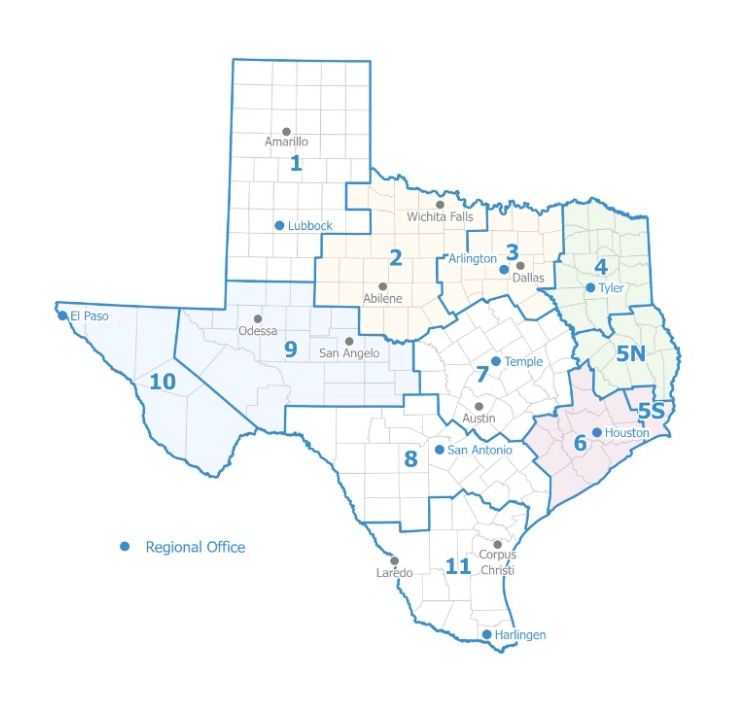
Chief Mueller confirmed that DPS will issue 12 new licenses in the coming months—bringing the total number of licensed TCUP dispensaries to 15 statewide. These licenses will be awarded through a competitive selection process and distributed across Texas’s public health regions to ensure patient access in rural as well as urban areas.
Applicants will be asked to list their preferred health region. Once assigned a region, a company may place its primary dispensary location there or open a satellite location in that region.
The program’s expansion rules also require balance: before any company can open a second satellite location in a single region, it must first operate at least one satellite in every other region. This prevents a concentration of dispensaries in metro areas while underserved rural areas go without access.
Two-Phase Licensing Process
The selection of these 12 new licenses will occur in two distinct phases:
Phase I: 2023 Applicants
July 15, 2025 – DPS sent letters to all 139 applicants from the May 2023 licensing round:
- Notifying them of the expansion plans under HB 46
- Offering the option to withdraw their application and receive a full refund of their application fee (due to the long wait since applying)
- Setting an August 15, 2025 deadline for withdrawal with refund
August 8 – September 15, 2025 – Application window open for existing applicants:
- 2023 applicants may supplement or update their applications, but no major rewrites are allowed—completely rewritten applications will be rejected
- Conflict of interest rule: A physician who prescribes medical cannabis cannot hold an ownership stake in a company applying for a license.
- One application per company: No business entity may be associated with more than one application.
September 16 – November 2025 – Evaluation and scoring:
- A nine-member scoring committee will review applications based on criteria posted on the DPS TCUP website.
December 1, 2025 – DPS will:
- Announce nine applicants selected for conditional approval
- Assign each approved licensee to a public health region
Phase II: New Applicants
August 8 – September 15, 2025 – Accepting new applications:
- This will be a competitive selection process to award the remaining three license
- 2023 applicants who rank #10-12 will be included in Phase II consideration.
April 1, 2026 (or sooner) – DPS will:
- Announce the three final conditional approvals
- Publish a three-company eligibility list (waiting list) for future licensing opportunities
Why This Matters
The expansion of TCUP through HB 46 and DPS’s new licensing plan represents a significant milestone for patients, physicians, and the emerging medical cannabis industry in Texas. By adding 12 new licenses and requiring geographic distribution across public health regions, DPS aims to ensure statewide access to medical cannabis for all qualifying patients.
The two-phase approach also acknowledges the long wait faced by 2023 applicants, giving them priority consideration before opening the process to new applicants.
For patients, this could mean shorter travel times to reach a dispensary, more competition driving product quality and affordability, and better availability of medication for qualifying conditions.
For prospective licensees, it underscores the need for readiness, compliance, and strategic planning—not only to secure a license but also to meet DPS’s access and distribution requirements.
Next Steps for Stakeholders
- Public Comment: Review and provide comments on proposed rules, which are posted in the Texas Register. This is your chance to provide feedback that could shape the final regulations.
- 2023 Applicants: Decide whether to proceed with your existing application or withdraw by the August 15 refund deadline. Click here for details, then submit supplemental documentation and update your application to reflect your current financial position.
- Prospective Applicants: The application window is now open — review the process, prepare your submission, and ensure compliance with ownership, conflict of interest, and application integrity rules.
- Patients and Advocates: Stay informed about which companies are approved and where new dispensary locations will be established.
Additional Resources
With the program’s expansion now in motion, the coming months will be pivotal in shaping the next era of medical cannabis access in Texas.