In 2025, Texas lawmakers tried three times to ban hemp-derived THC products: once in the regular session and once in each of two special sessions. None of the bills became law. Since then, the changes have come from the governor, state agencies and the courts. This page tracks the whole story, starting with the most recent developments.
The short version:
- Regular session, 2025: The Legislature passed Senate Bill 3, a ban on hemp-derived THC products. Gov. Greg Abbott vetoed it on June 22, 2025.
- First special session, July 21 to Aug. 15, 2025: The Senate passed SB 5, another ban. The House did not vote on it.
- Second special session, Aug. 15 to Sept. 4, 2025: The Senate passed SB 6, a third ban. The House did not vote on it.
- Since then: The governor issued an executive order on Sept. 10, 2025. New state rules took effect March 31, 2026, and delta-8 and other synthesized THC became Schedule I controlled substances on July 31, 2026. Lawsuits over those changes are ongoing.
What we’d like to see
Texas businesses should have clear, workable rules instead of constant uncertainty. We stand for a responsibly regulated hemp marketplace and, in the long run, legal access for adults.
Timeline
Most recent first.
September 2026: Lawsuits continue, with no injunctions in place
Several lawsuits challenging the state’s hemp rules are moving through the courts. As of mid-September 2026, no court had issued a temporary restraining order or injunction, and hearings were set for later in the fall.
July 31, 2026: Delta-8 and other synthesized THC become Schedule I
On July 10, 2026, the Department of State Health Services (DSHS) published a notice reinstating its 2021 cannabinoid definitions, which classify synthesized delta-8, delta-10, THCP and other non-delta-9 THC isomers as Schedule I controlled substances. The notice followed a May 2026 Texas Supreme Court ruling that removed an injunction that had kept those definitions on hold for close to five years. The change took effect July 31, 2026. It does not affect the Compassionate Use Program.
July 7, 2026: Senate committee holds interim hearing on THC
The Senate Health and Human Services Committee took invited testimony on THC’s impact on health care costs and mental health. Sen. Charles Perry confirmed he intends to file legislation again to ban consumable hemp-derived THC products.
April 8, 2026: Hemp businesses sue over the new rules
The Texas Hemp Business Council, Hemp Industry and Farmers of America and several Texas hemp businesses filed a lawsuit in Travis County challenging the DSHS rules. They argue the agencies exceeded their authority by adopting a “total THC” standard the Legislature chose not to change during the 89th session.
March 31, 2026: New DSHS hemp rules take effect
DSHS adopted new rules for consumable hemp products on March 2, 2026, and they took effect March 31, 2026. The rules changed the THC testing standard from delta-9 only to total THC, which effectively banned THCA flower and other smokable hemp products. They also raised annual fees to $10,000 for manufacturers and $5,000 for retailers.
Dec. 26, 2025: DSHS proposes new hemp rules
DSHS published proposed rules that would reshape how consumable hemp products are regulated in Texas, including recall procedures, a 21-and-over age restriction, expanded inspections and higher fees. A public hearing was scheduled for Jan. 9, 2026.
Oct. 2, 2025: Emergency rules bar sales to anyone under 21
DSHS adopted emergency rules prohibiting licensed and registered sellers of consumable hemp products from selling to anyone under 21, as its first step in carrying out the governor’s executive order. The rules took effect Oct. 2, 2025, and DSHS announced them the next day. Later that month, Gov. Abbott directed the Department of Public Safety to increase enforcement against vape and smoke shops that were out of compliance.
Read about the emergency rules · Read about the enforcement directive
Sept. 10, 2025: Gov. Abbott issues executive order on hemp
After the Legislature did not pass a ban on hemp sales to customers under 21, Gov. Abbott issued an executive order directing DSHS, the Texas Alcoholic Beverage Commission and the Department of Public Safety to act. The order told the agencies to ban sales to minors, require ID checks, and review rules on testing, labeling, licensing fees and recordkeeping.
Sept. 4, 2025: Second special session ends without a ban
Lawmakers did not reach agreement on hemp in either special session. SB 6 passed the Senate but never received a vote in the House, so hemp policy stayed as it was, apart from a separate ban on cannabinoid vape sales that took effect Sept. 1, 2025.
Aug. 19, 2025: Senate passes SB 6
The Senate passed SB 6 four days after it was filed. The House referred it to the Public Health Committee on Aug. 20, 2025, and took no further action. See the official history of SB 6.
Aug. 15, 2025: Second special session begins and SB 6 advances the same day
Gov. Abbott Calls Second Special Session
The governor’s first called special session concluded on Aug. 15 and he immediately called the legislature back for a second 30-day special session. Governor Greg Abbott’s proclamation includes two cannabis-related items:
- Protect Children from THC – Legislation making it a crime to provide hemp-derived products to individuals under 21 years of age. Note: Some versions of the proclamation mistakenly said 18+. This was confirmed to be a clerical error. The correct age is 21+.
- Regulate Hemp-Derived Products – Legislation to comprehensively regulate hemp-derived products, including limiting potency, restricting synthetically modified compounds, and establishing enforcement mechanisms — all without banning lawful hemp-derived products.
Senate THC Bill Advances Quickly
Just minutes after beginning the second special session, the Senate State Affairs Committee held a hearing on Sen. Charles Perry’s SB 6 — a bill identical to SB 5 as passed by the Senate in the first special session. To move this quickly, the Senate suspended their own rules to circumvent public notice requirements, disenfranchising many Texans who would have testified in opposition to SB 6.
After very little testimony and a quick hearing, the committee voted 9-0 to advance the bill. SB 6 now heads to the full Senate for a vote.
The Texas House did not have quorum and could not do any business, but Democrats are expected to return when the House reconvenes on Monday. If quorum is reached, the House could move just as quickly as the Senate to pass priority legislation — including this sweeping THC ban.
Senator Charles Perry Files Senate Bill 6
Senate Bill 6 (which is very similar to SB 3 from the regular session) aims to criminalize the manufacturing, sale, possession and use of consumable hemp products that contain any amount of any cannabinoid other than CBD and CBG. The bill would ban “artificial or synthetic” cannabinoids, but does not define the terms. (HB 6 is a duplicate of SB 6.)
SB 6/HB 6 choose criminalization over regulation and hands a multibillion-dollar industry to the illicit market — where there are no product testing requirements, no labeling standards, and no business licenses. Texans will continue to access hemp-derived THC, but now they’ll do so in the shadows, without consumer protections or recourse. See a full overview of the bill below.
The only way to protect public health and safety is through smart regulation — not prohibition. We regulate alcohol, a far more dangerous substance. We can do the same with hemp-derived THC.
Polling consistently shows that a majority of Texans support cannabis legalization. According to a 2025 University of Houston Hobby School of Public Affairs poll, 79% of Texans support legalizing medical marijuana, 69% support decriminalizing marijuana possession, and 62% support legalizing recreational marijuana. These findings indicate that Texans favor a regulated approach to cannabis policy, rather than a return to prohibition.
SB 6/ HB 6 defy the will of the people and Gov. Abbott’s stated mission to regulate hemp products during the special session.
Aug. 13, 2025: House Public Health Committee hears HB 5
The committee held a 12-hour hearing on HB 5, the House version of the ban, and left the bill pending. With the first special session ending two days later and House Democrats still away, the bill did not advance.
Aug. 5, 2025: House Stalls as Quorum Break Puts Hemp Ban Bills on Hold
The Texas House has come to a standstill. Democratic lawmakers have broken quorum in protest over proposed redistricting maps, leaving the chamber without the minimum number of members required to conduct business. Without a quorum, the House cannot debate, amend, or vote on any legislation — including Senate Bill 5 (SB 5) and House Bill 5 (HB 5), the controversial measures that would ban hemp-derived THC products.
This unexpected turn of events has thrown the special session into uncertainty.
For now, the hemp ban bills are stalled. But advocates should remain vigilant, because while the full House cannot pass legislation without a quorum, House committees — including the Public Health Committee — could still technically meet and advance bills. Since the Public Health Committee is composed mostly of Republican members, there’s a possibility they could vote to move HB 5 out of committee. That said, without a functioning House floor, the bill would have nowhere to go next.
Aug. 1, 2025: Senate Passes THC Ban, Ignoring Abbott’s Call for Regulation
The passage of SB 5 raises significant concerns about enforcement, consumer safety, and the state’s commitment to freedom and personal responsibility. Advocates warn that pushing the hemp market underground will lead to unregulated, unsafe products and do nothing to prevent youth access — the very issue the bill claims to address.
In the House, Chairman Gary VanDeaver introduced HB 5. Except for the mail delivery amendment, HB 5 is identical to SB 5. The Chairman has made it clear to members of the Public Health Committee that this bill is a “starting point.” The committee will have to make a BIG decision: support Dan Patrick’s prohibition campaign or stand Gov. Abbott and the nearly 80% of Texans who support regulation rather than criminalization.
July 28, 2025: Senate Vote Scheduled for SB 5
The Senate State Affairs Committee quickly approved and advanced SB 5, Sen. Perry’s THC Ban. Now the bill has been scheduled for a vote in the Senate on Monday, July 28.
We are disappointed to see Sen. Perry continue with his efforts to pass an outright ban on hemp-derived THC. He and Lt. Gov. Dan Patrick are out of touch with the vast majority of Texans who favor regulation, rather than prohibition. SB 5 misses the mark when it comes to Gov. Abbott’s special session agenda, which calls for lawmakers to restrict youth access and better regulate consumable hemp products for responsible adult use. While SB 5 is the first comprehensive bill to be filed and receive a vote, we fully expect the House to put forward a more reasonable bill.
July 2025: Texas Policy Research Recommends NO Vote on SB 5
SB 5 purports to protect children, but instead treats all Texans, adults included, as if they are incapable of making informed decisions. Better policy options exist: age limits, testing requirements, child-resistant packaging, and marketing restrictions tailored to youth protection. These could address safety concerns without banning non-impairing, widely used cannabinoids like CBN and CBC. Governor Abbott himself laid out these options when vetoing SB 3, encouraging a regulatory model that would be enforceable and withstand judicial scrutiny.
SB 5 may look like a more cautious alternative to SB 3, but it still embodies the same underlying problems: it criminalizes peaceful, adult activity; bans non-impairing, federally legal substances; and burdens small businesses with heavy-handed regulation. It repeats the policy mistakes of prohibition under the banner of public health, ignoring both federal law and the governor’s clear guidance. Texans deserve a smarter, liberty-respecting approach that protects minors without criminalizing adults. For these reasons, Texas Policy Research recommends that lawmakers vote NO on SB 5.
Read more here.
July 22, 2025: Senate State Affairs Committee hears and approves SB 5
SB 5 was quickly referred to the Senate State Affairs Committee and immediately scheduled for a hearing with very little notice to the public.
Sen. Charles Perry’s THC prohibition bill - SB 5 - is moving very quickly. The controversial legislation was introduced on the first day of the special session and immediately scheduled for a hearing the next morning. In spite of the last minute hearing, advocates from across the state traveled to Austin to testify and voice opposition to SB 5. Video of the full hearing can be found here.
Even after hours of compelling testimony, the Senate State Affairs committee voted unanimously to approve SB 5, advancing the bill to the Texas Senate for a vote. The Senate meets on Thursday (7/24) and is expected to vote on SB 5. If passed, the bill will then move on to the Texas House for consideration.
We have significant concerns about the bill’s provisions that criminalize possession of unapproved hemp products. Sen. Perry pushed back on my testimony, saying there is no jail for first and second offenses, which isn’t accurate. While there is no jail time associated with Class C Misdemeanors, a person can (and usually will be) arrested/taken to jail, prosecuted, and saddled with a permanent criminal record for a drug offense which hinders their access to education, employment, housing, child custody, etc.
Even worse, though, are the compounding charges for possessing an unregistered product. In addition to the Class C Misd. for possession of a product that contains any amount of any cannabinoid other than CBD or CBG, a person would face an additional Class B Misd., which carries a penalty of up to SIX MONTHS in jail.
July 21, 2025: First special session begins and SB 5 is filed
Gov. Abbott called lawmakers back to regulate consumable hemp products after vetoing SB 3. Sen. Charles Perry filed SB 5, a new ban, on the first day.
June 22, 2025: Gov. Abbott vetoes SB 3
Gov. Abbott vetoed SB 3 and called a special session to regulate hemp products. In vetoing the bill, he said: “Texas can and should reasonably regulate consumable hemp products to protect public health and safety without eliminating consumer access.”
May 25, 2025: SB 3 passes the Legislature
The House passed SB 3 as amended on May 22, 2025, and the Senate agreed to the House changes on May 25, 2025. The bill was sent to the governor on May 27, 2025.
April 9, 2025: Speaker Burrows on Bills to Ban or Regulate THC
Community Impact Interview - April 9, 2025
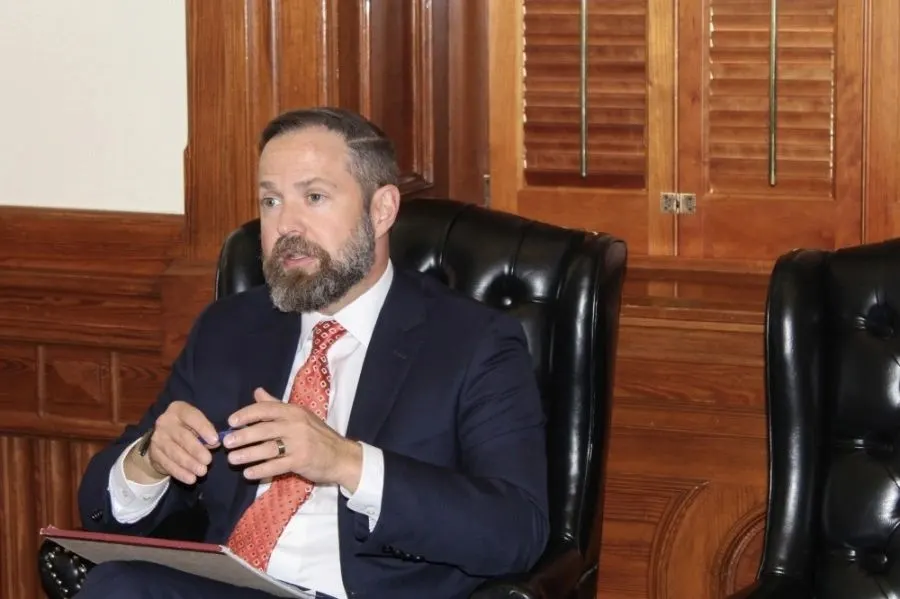
Speaker of the House Dustin Burrows (R - Lubbock)
The Senate passed legislation that would ban all THC sales in Texas. On April 7, the House State Affairs Committee is scheduled to discuss the proposed Senate ban and a House bill that would tighten regulations on hemp retailers. Where is the House on these proposals?
“Look, I’m a father of three. All of a sudden I drive down… from Lubbock to Dallas to Austin, and there are all of these stores that have popped up [overnight]. I’m all for small business, but I really don’t know what’s being sold… and I really don’t know how safe this is. I have significant concerns.
“That’s why we’re going to have these hearings. … I think all members of the Texas House are interested in hearing from not only the public—and the business owners will have an opportunity to make their case—but experts in the field about the dangers that are associated with some of these chemical compounds.
“What we’re seeing sold out of here, people think is maybe just marijuana. I think a lot of it is synthetic. I think it may be, in fact, a lot more dangerous than what people are thinking about.”
April 8, 2025: Governor Abbott on Banning or Regulating THC for Adults
FOX 26 Houston Interview - April 8, 2025
Gov. Greg Abbott (R)
FOX 26’s Greg Groogan: “Should we ban THC sales or try to better regulate them?”
“Well, that very question is being debated in both chambers as we speak. Here’s several things that are being sought to be achieved: one is to deny access by children to high-level THC-content materials, whether it be edibles or drinks or whatever the case may be. Both the House and Senate seem to agree upon that. As it concerns other avenues for adults, there’s a difference between the House and Senate that I think will get worked out before the end of the session.”
April 7, 2025: House State Affairs Committee Hearing on HB 28/SB3
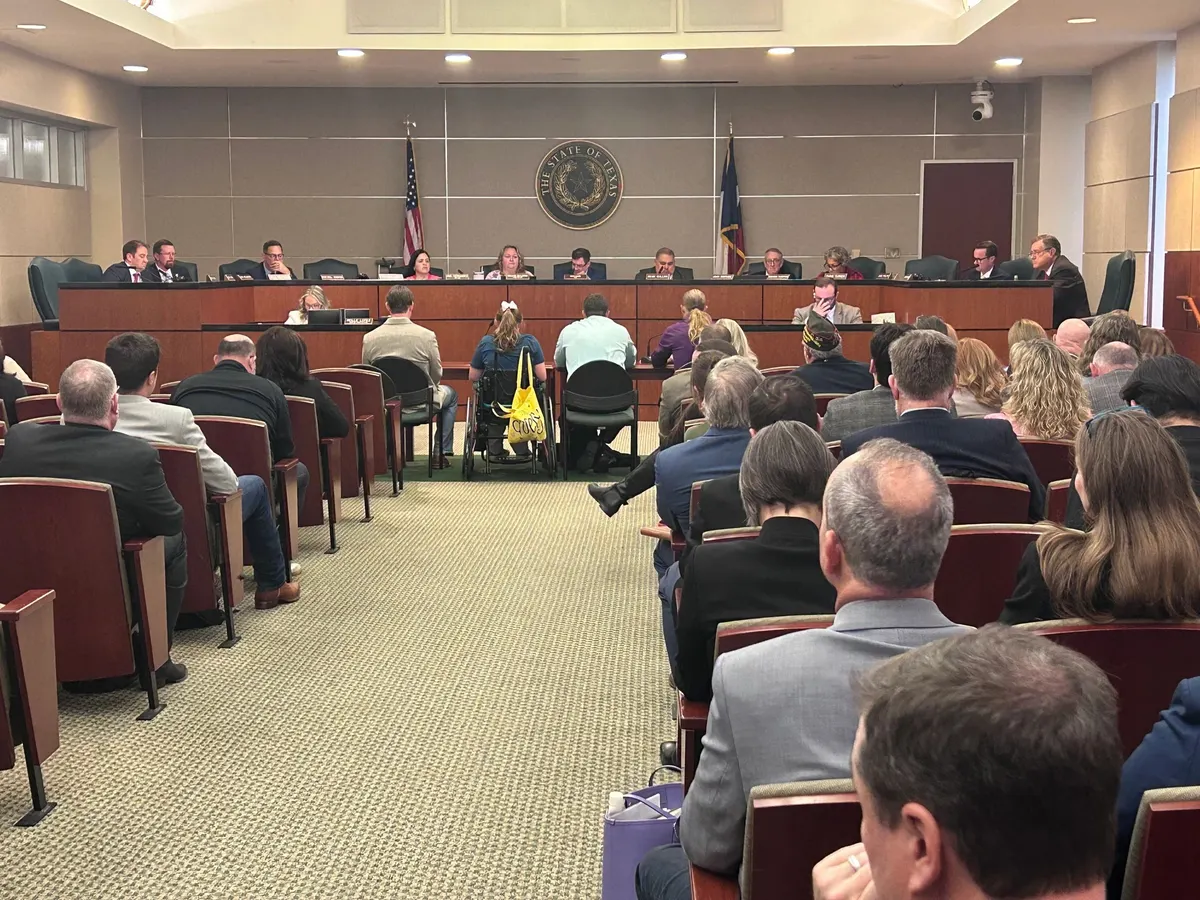
On April 7, 2025, Hundreds of Texans flooded the State Capitol to testify in opposition to two bills that threaten to dismantle the state’s hemp industry and criminalize consumers who use federally legal hemp products. The House Committee on State Affairs heard testimony on House Bill 28, while advocates focused intense criticism on Senate Bill 3, calling it the more extreme and damaging of the two proposals.
More than 15 hours of public testimony was provided by advocates from across the state—veterans, healthcare professionals, small business owners, patients, and consumers—all warning lawmakers that both bills would have devastating consequences for public health, the economy, and personal freedom.
KVUE News: House State Affairs Committee Hearing on HB28/SB3
State lawmakers on Monday laid out a proposal to ban nearly all edible THC products.
Just before 2 a.m., a Texas House committee wrapped up public testimony on bills that would restrict consumable THC products.
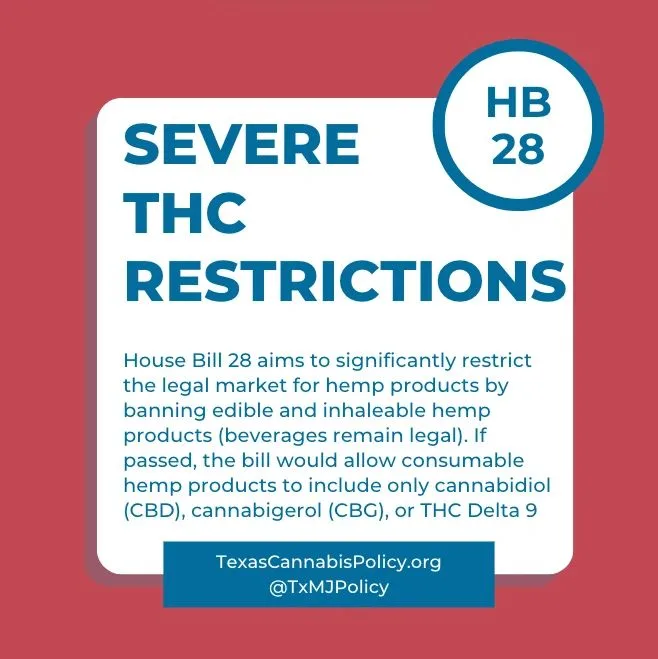
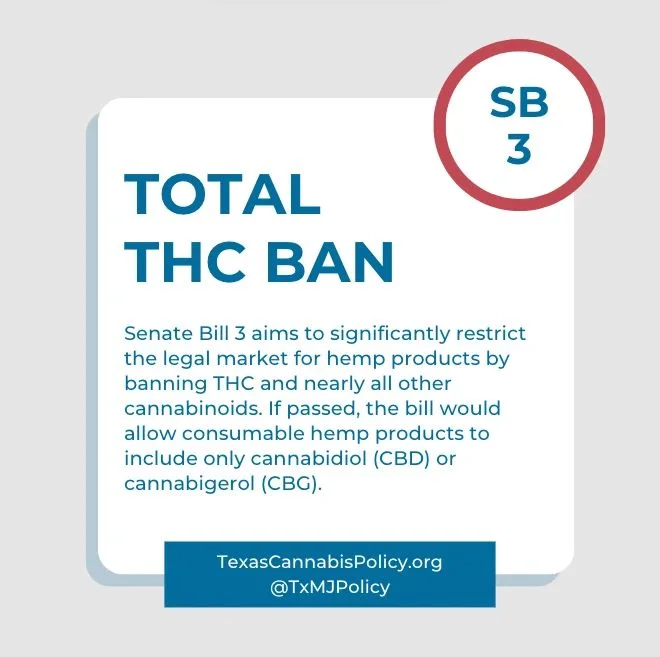
March 19, 2025: Senate passes SB 3
The Senate State Affairs Committee heard SB 3 on March 3 and March 10, 2025, and the full Senate passed it on March 19, 2025.
March 10, 2025: Senate State Affairs Committee Hearing on Senate Bill 3
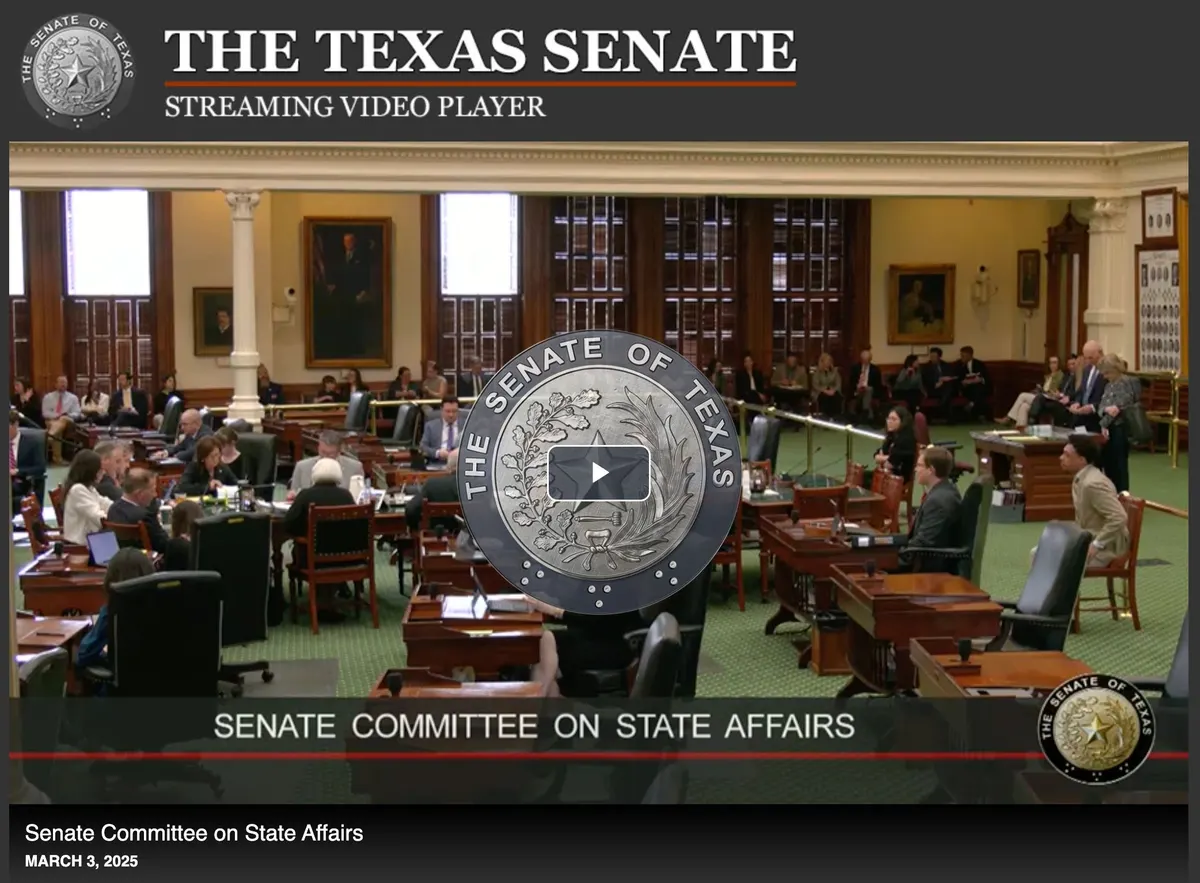
On March 10, 2025, the Senate State Affairs Committee hosted a hearing for Sen. Charles Perry’s controversial Senate Bill 3, which would ban THC and nearly all other cannabinoids. The committee also heard SB 1505, Perry’s bill that makes changes to the Compassionate Use Program.
The hearing attracted a large turnout, with over 170 individuals registering to testify, highlighting the intense public interest and industry stakes. Testifying witnesses included regulators, hemp business owners, employees, consumers, cannabis attorneys, medical professionals, and law enforcement.
The hearing was covered by the Texas Tribune, Houston Chronicle, CBS Austin, Fox 7, and Marijuana Moment.
Lieutenant Governor Dan Patrick is moving full force ahead with his plan to ban hemp-derived THC. Authored by Sen. Charles Perry, Senate Bill 3 will be a top priority for the Senate, but the bill’s details have not yet been made public.
While we share their concern about youth access and potentially dangerous products sailing under the radar of regulators, we oppose banning cannabis for responsible adult use. Such a ban would hand this multi-billion dollar industry over to the illicit market, abandoning all opportunity to properly regulate the industry. Banning THC would be harmful to our state’s commitment to public health and safety.
Reasonable regulations, such as age restrictions, clear labeling, and testing standards, can address these concerns. The Department of State Health Services should be empowered to enforce these rules effectively, ensuring a safer marketplace.
Feb. 20, 2025: SB 3 is filed
Sen. Charles Perry filed SB 3, a priority of Lt. Gov. Dan Patrick, to ban hemp-derived THC products. See the official history of SB 3.
Feb. 20, 2025: Senator Perry Talks Cannabis Policy with the Texas Tribune
We share Sen. Perry’s concern about youth access and potentially dangerous products sailing under the radar of regulators, but we oppose banning cannabis for responsible adult use. Such a ban would hand this multi-billion dollar industry over to the illicit market, abandoning all opportunity to enforce regulations.
Rather than dismantling a thriving sector of the Texas economy, refining regulations would restrict youth access and ensure public health and safety. Read more here.
2025 session: What TCPC recommended
These were our recommendations to lawmakers during the 2025 legislative session.
Adult Use Cannabis Should Be Well Regulated
Our state’s current cannabis laws are unnecessarily complicated, inconsistent, and ineffective.
We encourage lawmakers to institute safeguards like age restrictions to keep THC products away from young people. We also support better guidance for packaging and advertising, asa well as consistent testing standards for in and out-of-state products. Most importantly, we support effective regulatory oversight by empowering the Department of State Health Services.
(Find our policy recommendations below.)
Now is the time to call on legislators to support sensible cannabis policies that prioritize regulation over prohibition, keeping Texans safe and our economy thriving!
THC Policy Recommendations
The under-regulated consumable hemp industry in Texas poses several concerns. First, while many retailers voluntarily ID their customers and only sell to adults, there are no legally-binding age restrictions in place for products that may cause impairment. Second, there is a lack of consistent standards when it comes to testing these products. Finally, the Department of Health and Human Services (DSHS) has been unable to adequately enforce the rules due to lack of resources.
In the interest of public health and safety, we share the common goal of consumer protection and keeping impairing hemp products away from children. To address these issues, it is imperative that we institute and enforce common sense regulations.
We propose the following solutions to ensure public health and safety:
-
Age Restrictions: Implement age restrictions for the sale of impairing hemp products. This will help prevent children from accessing these products and ensure they are only available for adult use.
-
Responsible Packaging and Advertising Standards: Enforce packaging and advertising standards to avoid appealing to children. Products that cause impairment should be clearly labeled, semi-synthetic should be disclosed, and Certificates of Analysis (COAs) should be more routinely verified by DSHS.
-
Lab Testing Standards and Procedures for Recall: Establish more robust lab testing standards to identify contaminants such as pesticides, molds, heavy metals, and (most importantly) residual solvents. The real danger when it comes to semi-synthetic THC products is in the way it’s processed, and the chemicals (residual solvents) left behind.
Current regulations require rigorous testing for Texas-made products, but out-of-state products are subject only to the testing requirements of the jurisdiction they came from. We should have some minimum safety standards in place for any out-of-state products sold by Texas retailers. Products found to be dangerous should be promptly recalled and warnings issued by DSHS to safeguard public health.
- Licensing and Accountability: Enforce the requirement that all retailers of consumable hemp products become registered with DSHS. Additionally, DSHS should be empowered to do much more random testing of products. When dangerous products are identified, manufacturers and retailers must be held accountable.
We urge the Texas Legislature to take action to ensure the implementation and enforcement of reasonable THC regulations. By addressing age restrictions, responsible packaging and advertising standards, lab testing protocols, and regulatory enforcement, we can ensure consumer protection and restrict youth access.
Important Note: It is important to acknowledge that the demand for Delta 8 THC and other impairing hemp products exists because our state maintains a policy of prohibition of naturally occurring Delta 9 THC cannabis products. Just like any other market, the cannabis industry operates based on supply and demand. Through innovation and the spirit of free enterprise, American entrepreneurs have discovered how to convert hemp-derived CBD into state and federally compliant THC products. However, fewer consumers would choose these semi-synthetic THC over botanical cannabis with naturally occurring Delta 9 THC if it were legal.
January 2025: Senate State Affairs Committee Interim Report
Cannabis Sections: Pages 42-48, 68-69.
Download PDF · Read our summary
2024: Senate State Affairs Committee Interim Charges and Hearings
Between legislative sessions (known as the “interim”), committees of lawmakers are tasked with “interim charges,” which call on them to study various areas of policy and make recommendations. Lt. Gov. Patrick tasked the Senate State Affairs Committee with two cannabis-related interim charges:
-
Banning Delta 8 and 9: “Examine the sale of intoxicating hemp products in Texas. Make recommendations to further regulate the sale of these products, and suggest legislation to stop retailers who market these products to children.”
-
Beverages with THC: Evaluate Texas laws and regulations concerning THC beverage manufacturing and delivery. Report on the current regulations and safeguards Texas may or may not have in place for drinks with any amount of THC. Recommend legislation to protect Texas consumers.”
On May 29, 2024, the committee, led by Chairman Bryan Hughes, hosted a hearing about “Banning Delta 8 and 9.” Few witnesses testified in support of an outright ban on THC. Most witnesses called on the committee to better regulate THC products. Watch testimony from invited witnesses.
Public testimony can be watched here, starting @7:41:15.
May’s hearing marked the beginning of the committee’s process to make recommendations that will be considered during the 2025 legislative session. These recommendations are likely to be reflected in Senate Bill 3, once the bill text is made available to the public.
On Oct. 17, 2024, the committee, which includes Sen. Perry, hosted a second hearing on “Beverages with THC.” Watch the hearing here.
Policy Overview of SB 6/ HB 6
Senate Bill 6 and House Bill 6 criminalize the manufacturing, sale, possession and use of consumable hemp products that contain any amount of any cannabinoid other than CBD and CBG. The bills ban “artificial or synthetic” cannabinoids, but do not define the terms.
SB 6/HB 6 choose criminalization over regulation and hand a multibillion-dollar industry to the illicit market — where there are no product testing requirements, no labeling standards, and no business licenses. Texans will continue to access hemp-derived THC, but now they’ll do so in the shadows, without consumer protections or recourse. We deserve better.
Prohibition and Criminal Penalties
- Warrantless Searches: Property owners must consent to warrantless searches by DPS or local law enforcement.
- Sales to Minors: Selling products containing CBD or CBG to anyone under 21 would be a Class A misdemeanor.
- Forgery of Lab Results: Forging, falsifying, or altering lab reports would be a third-degree felony.
- Cannabinoid Restrictions: Manufacturing or selling hemp products containing any detectable cannabinoid other than CBD or CBG would be a third-degree felony.
- Possession Offenses:
- Possessing hemp products with cannabinoids other than CBD or CBG would be a Class C misdemeanor, with escalating penalties.
- Possessing a consumable hemp product not registered with the department would be a Class B misdemeanor.
- If the possession violates more than one law, prosecutors may pursue charges under either statute — or both.
- Smokable Hemp: Manufacturing or selling smokable hemp products would be a Class B misdemeanor.
- Shipping Restrictions (SB 6): Mailing or shipping a consumable hemp product containing any cannabinoid other than CBD/CBG would be a Class A misdemeanor.
- Shipping Restrictions (HB 6): Mailing or shipping a consumable hemp product containing any amount of any cannabinoid would be a Class A misdemeanor.
- Effective Date: All provisions would take effect on the 91st day after the legislative session ends.
Administrative Penalties and Licensing Fees
- Administrative Fines: Businesses may be fined up to $10,000 per violation of the law or department regulations. The department may revoke, suspend, or refuse to renew a license or registration for a violation.
- Annual License Fees:
- Manufacturing/Processing (per location): $10,000/year
- Retail (per location): $20,000/year
Testing, Registration, and Product Labeling Requirements
- Lab Testing:
- Products must be tested by a DEA-registered laboratory located in Texas.
- Test results must be reported to the Department of State Health Services (DSHS).
- Testing must include microbial contamination, in addition to heavy metals, pesticides, and residual solvents (as currently required by rule).
- Retailer Reporting & Registration:
- Retailers must report the type and concentration of each cannabinoid present in each product they offer for sale.
- All consumable hemp products must be registered with DSHS by March 1, 2026.
- Labeling and Packaging:
- Outer packaging must disclose full product information.
- Packaging must be tamper-evident and child-resistant.
- Multi-serving or multi-unit products must be resealable while maintaining child-resistance.
- Products and advertisements cannot claim medical use.
Restricted Sales of CBD and CBG Isolate
- Age Restrictions: Must be 21 or older to purchase any product containing cannabinoids.
- Display Requirements: Consumable hemp products must be displayed separately from products legal for children.
- Buffer Zones: No cannabinoid-containing products may be sold within 1,000 feet of a school.
- Ingredient Restrictions: Products cannot be mixed with alcohol, tobacco, nicotine, kratom, kava, mushrooms, tianeptine, or any derivative of those substances.
- Youth Appeal Restrictions:
- Manufacturing, packaging, marketing, and advertising of edible hemp products must be designed to avoid appealing to children.